
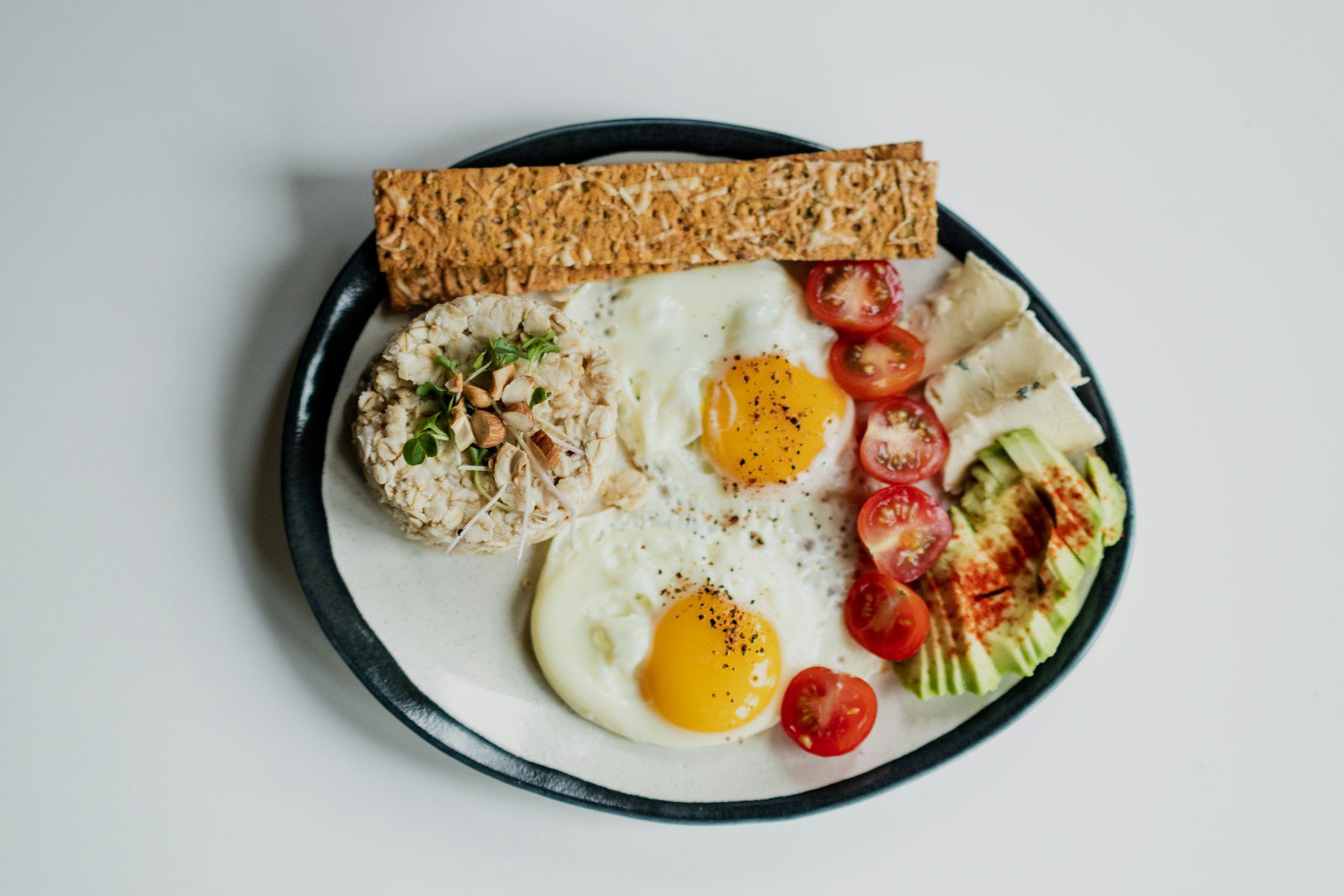
Intermittent fasting and protein go together better than most people think, but a shorter eating window makes it easy to fall short. If you eat two meals in eight hours instead of three or four across the day, protein is usually the first thing to slip. This guide shows you how much protein women need, how to spread it across a short window, and what to eat so you stay full and keep your muscle while you fast.
Here’s the short version. Aim for a real protein source at every meal, roughly 25 to 30 grams each time. Break your fast with protein, not a snack. And if you train or you’re losing weight, plan for more than the bare minimum.
Why protein matters more when you fast
Protein does a lot of quiet work. It builds and repairs muscle, keeps your skin, hair and nails in shape, and helps make the enzymes and hormones your body runs on. Your body can’t store it the way it stores fat, so you need a steady supply from food.
When you fast, you eat fewer times a day. Fewer meals means fewer chances to get protein in. A typical day of eating might include eggs at breakfast, a chicken salad at lunch and fish at dinner. Cut breakfast, and a big chunk of that protein goes with it unless you make up for it later.
There’s also the muscle question. In a 12-week randomized trial published in JAMA Internal Medicine, adults who ate within an eight-hour window lost a little weight, but a large share of it came from lean mass rather than fat. The University of Hawaiʻi Cancer Center’s summary of the time-restricted eating study reports that 65% of the weight lost by the group measured in person was lean mass, compared with a typical 20% to 30% during weight loss. The study didn’t track protein, so it can’t tell us why. But it’s a good reason not to treat protein as an afterthought when your window gets shorter.
For women, muscle matters for strength, balance, blood sugar and how well you age. It’s much easier to keep the muscle you have than to rebuild it later.
How much protein do women need while intermittent fasting?
Start with the official floor. The Recommended Dietary Allowance is 0.8 grams of protein per kilogram of body weight, or about 0.36 grams per pound. Harvard Health explains that this RDA is the minimum you need to keep from getting sick, not a target for feeling and performing your best.
If you exercise, the numbers go up. The International Society of Sports Nutrition’s position stand on protein and exercise says 1.4 to 2.0 grams per kilogram per day is enough for most people who exercise. That range is a guide for active people, not a rule for everyone.
Fasting doesn’t change your total protein needs. It changes how many meals you have to meet them. Here’s what those numbers look like in grams per day.
| Body weight | Minimum (RDA, 0.8 g/kg) | Active range (1.4 to 2.0 g/kg) |
|---|---|---|
| 120 lb (54 kg) | About 44 g | About 76 to 109 g |
| 140 lb (64 kg) | About 51 g | About 89 to 127 g |
| 160 lb (73 kg) | About 58 g | About 102 to 145 g |
| 180 lb (82 kg) | About 65 g | About 114 to 163 g |
So where should you land? If you walk a bit and don’t lift, getting comfortably above the RDA is a solid goal. If you strength train a few times a week or you’re trying to lose fat while you fast, the lower end of the active range is a sensible place to aim. Most women don’t need to push to the top of it.
Pregnancy is different. Harvard Health notes that experts recommend 75 to 100 grams a day during pregnancy, and fasting isn’t advised then anyway. More on that below.
How to get enough protein while intermittent fasting
The math gets tight fast. Say you weigh 140 pounds, you lift twice a week and you aim for about 90 grams a day on a 16:8 schedule. Split over two meals, that’s 45 grams each. That’s a lot of chicken in one sitting.
Three easier ways to make it work:
- Eat three times in your window, not two. An eight-hour window has room for two meals and a protein snack. Even a six-hour window can fit a meal, a snack and another meal.
- Put protein first on every plate. Decide on the protein, then build the rest of the meal around it.
- Widen your window on hard training days. If you can’t fit what you need into eight hours, a 14:10 day is fine. Fasting should work for you, not the other way round.
How much protein per meal
Your body uses protein better when you spread it out than when you pile it into one dinner. Researchers Douglas Paddon-Jones and Blake Rasmussen proposed a target of 25 to 30 grams of high-quality protein per meal in their work on preventing age-related muscle loss. The ISSN position stand gives a similar range of 20 to 40 grams per serving and suggests spacing doses every three to four hours.
That spacing fits a 16:8 window nicely. Eat at noon, around 3:30 and again at 7:30, and you’ve got three protein doses in eight hours.
A sample 16:8 protein day
Here’s what about 90 grams can look like with a noon to 8 p.m. window. Protein figures come from Cleveland Clinic’s list of high-protein foods.
| Time | Meal | Protein (approx.) |
|---|---|---|
| 12:00 | 2 eggs plus 4 egg whites scrambled with spinach, a slice of whole-grain toast | 25 g |
| 3:30 | 1 cup plain Greek yogurt with berries and a quarter cup of pumpkin seeds | 31 g |
| 7:30 | 3 oz chicken breast with half a cup of lentils, roasted vegetables and rice | 36 g |
| Total | About 92 g |
The toast, berries, vegetables and rice add a few grams too, so the real total runs a bit higher. You don’t have to count that closely. The point is that three solid protein hits get you there without forcing down a giant steak.
The best protein foods for a short eating window
Good protein for fasting is protein you’ll actually eat, that fills you up and that’s easy to prepare when you’re hungry. The Harvard Nutrition Source on protein makes a useful point: the whole “protein package” matters. What comes with the protein, like fiber, fat and sodium, likely shapes your health as much as the protein itself. Its advice is to choose fish, poultry, beans and nuts, limit red meat and cheese, and avoid processed meats like bacon and cold cuts.
Here are easy options with their protein, per Cleveland Clinic’s list.
| Food | Serving | Protein |
|---|---|---|
| Chicken breast (skinless) | 3 oz | 27 g |
| Turkey breast | 3 oz | 26 g |
| Canned tuna in water | 3 oz | 20 g |
| Salmon (cooked) | 3 oz | 19 g |
| Tempeh | 3 oz | 18 g |
| Chickpeas | 1 cup | 15 g |
| Cottage cheese (1%) | ½ cup | 14 g |
| Egg whites | 4 whites | 13 g |
| Whole eggs | 2 large | 12 g |
| Plain fat-free Greek yogurt | ½ cup | 11 g |
| Tofu | ¾ cup | 10 g |
| Lentils (cooked) | ½ cup | 9 g |
| Pumpkin seeds | ¼ cup | 9 g |
Plant-based protein while fasting
You can absolutely hit your numbers without meat. Tempeh, tofu, lentils, chickpeas, edamame and soy milk all pull their weight. Harvard’s Nutrition Source suggests mixing plant sources through the day so you cover all the essential amino acids. In practice, that just means eating a variety: beans with grains, tofu with rice, seeds on your yogurt or salad.
Plant proteins tend to come with more fiber, which is great, but it also means they’re bulkier. In a short window you may need a bit more volume to hit the same number. A plate with tempeh, chickpeas and a sprinkle of pumpkin seeds gets you a long way.
Intermittent fasting and protein on different schedules
The shorter your window, the harder protein gets. Here’s how it plays out on the most common schedules, using a 90-gram daily target as an example. If you’re still picking a schedule, our comparison of the best intermittent fasting schedules for women walks through each one.
| Schedule | Eating window | Realistic protein plan | How hard is 90 g? |
|---|---|---|---|
| 12:12 | 12 hours | 3 meals of about 30 g | Easy |
| 14:10 | 10 hours | 3 meals of about 30 g | Easy |
| 16:8 | 8 hours | 2 meals plus a protein snack | Doable with planning |
| 18:6 | 6 hours | 2 large meals of about 40 g plus a small snack | Hard |
| OMAD (one meal a day) | About 1 hour | 1 very large meal | Very hard for most women |
This is why we’re not fans of OMAD for most women who care about muscle. Eating 90 grams of protein in one sitting means something like a large chicken breast, a cup of chickpeas and a bowl of Greek yogurt, all at once. Some people manage it. Most end up well short, day after day.
If you love the feel of a long fast, a better compromise is 16:8 most days and 14:10 on days you train. You keep the rhythm and still get enough protein. For a full walkthrough of the most popular schedule, see our guide to 16:8 intermittent fasting for women.
Breaking your fast with protein
Your first meal sets the tone for the rest of your window. Break your fast with a protein-forward meal, and the rest of the day gets easier. Break it with a pastry, and you’ll be chasing protein (and probably snacks) until your window closes.
Good first meals look like eggs with vegetables, Greek yogurt with fruit and seeds, a tofu scramble, cottage cheese on whole-grain toast, or leftover chicken and lentils. Keep the portion normal. A huge first meal after 16 hours can leave you sluggish. For more ideas, see our guide on what to eat when breaking a fast.
Keep protein inside your window
Protein has calories, so a protein shake, milk in your coffee or a handful of nuts ends your fast. That’s fine. It just means you eat it inside your window, not before. Our guide to what breaks a fast covers the gray areas, like collagen and bone broth.
Protein, strength training and fasting
Protein alone won’t keep your muscle. You also have to give your muscles a reason to stay, and that reason is resistance training. Two or three sessions a week with weights, bands or bodyweight moves is a common starting point.
You don’t need perfect timing, but a few habits help:
- If you train late in your fast, plan a protein meal soon after. Don’t push your fast another three hours past a hard session.
- If you train in the morning before your window opens, consider shifting your window earlier on those days.
- Keep protein steady on rest days too. Muscle repair doesn’t stop the day after you lift.
We cover workout timing, fasted training and recovery in depth in our guide to intermittent fasting and exercise for women.
Common protein mistakes on intermittent fasting
These come up again and again.
- Skipping breakfast and never replacing it. If your old breakfast was your main protein meal, you need to move that protein somewhere else.
- One big dinner, nothing else. One meal can’t carry 90 grams comfortably. Spread it out.
- Grazing on carbs at the start of the window. Crackers and fruit are fine, but lead with protein so you’re not starving two hours later.
- Leaning on protein bars. Some are fine. Many are closer to candy. Read the label and treat them as a backup, not a meal.
- Ignoring hunger signals. If you’re ravenous and irritable every day, your window may be too short or your meals too small. Our guide to intermittent fasting side effects covers what to adjust.
A simple checklist for protein on a fasting schedule
- Pick a daily protein target from the table above.
- Divide it into two or three meals of roughly 25 to 40 grams.
- Break your fast with protein.
- Keep two quick backups at home: Greek yogurt, cottage cheese, eggs, canned tuna or tofu.
- Lift or do resistance work two to three times a week.
- Widen your window on days you can’t hit your target.
Who should not fast, or should talk to a doctor first
Intermittent fasting isn’t right for everyone. Skip it, or get medical advice first, if any of these apply to you:
- You’re pregnant, trying to get pregnant or breastfeeding.
- You have a history of an eating disorder or disordered eating.
- You have diabetes or take medication that lowers blood sugar, such as insulin.
- You’re under 18.
- You have kidney disease or have been told to limit protein. Talk to your doctor before raising your protein intake.
- You have another chronic health condition or take regular medication.
If fasting leaves you dizzy, faint, or anxious about food, stop and check in with a healthcare professional.
FAQ: intermittent fasting and protein
Does protein break a fast?
Yes, protein breaks a fast because it contains calories and triggers digestion. That includes protein shakes, collagen, milk and nuts. This isn’t a problem. Just eat your protein inside your eating window, and aim to make it the center of your first meal so you start the window full and steady.
How much protein should I eat on 16:8 intermittent fasting?
Your daily protein need doesn’t change on 16:8. The RDA is 0.8 grams per kilogram of body weight, and active women often aim for 1.4 to 2.0 grams per kilogram. On 16:8, split that into two or three meals of about 25 to 40 grams each within your eight hours.
Can you build muscle while intermittent fasting?
You can keep and build muscle while fasting if you eat enough protein and do regular resistance training. The hard part is fitting enough protein into fewer meals. Aim for three protein-rich eating occasions in your window, lift two to three times a week, and widen your window on training days if needed.
Should I break my fast with protein?
Yes, breaking your fast with protein is a smart move for most women. A first meal built around eggs, Greek yogurt, tofu, fish or chicken makes it easier to reach your daily target. Add vegetables or fruit and some whole grains, keep the portion normal, and save heavy or very sugary foods for later.
Are protein shakes OK during intermittent fasting?
Protein shakes are fine during your eating window, but not during your fast, because they contain calories. A shake can help on busy days or after training when you can’t fit a full meal. Treat it as a backup to real food, and check the label for added sugar and the actual grams of protein.
The bottom line
Intermittent fasting and protein work well together once you plan for it. Know your daily number, split it into two or three real meals, break your fast with protein and keep lifting. If you can’t hit your target in your window, widen the window. Protein beats the clock.
FastHer is built for women, so it’s set up for exactly this kind of balance: a fasting timer, menstrual cycle tracking and cycle-aware plans that let your window flex in the weeks you need more food. Collecting little Helper characters along the way makes it a bit more fun to keep going. FastHer is launching on iOS and Android.
This article is general information, not medical advice. Talk to your doctor before changing your diet or starting to fast, especially if you have a health condition or take medication.
Discover more from FastHer
Subscribe to get the latest posts sent to your email.